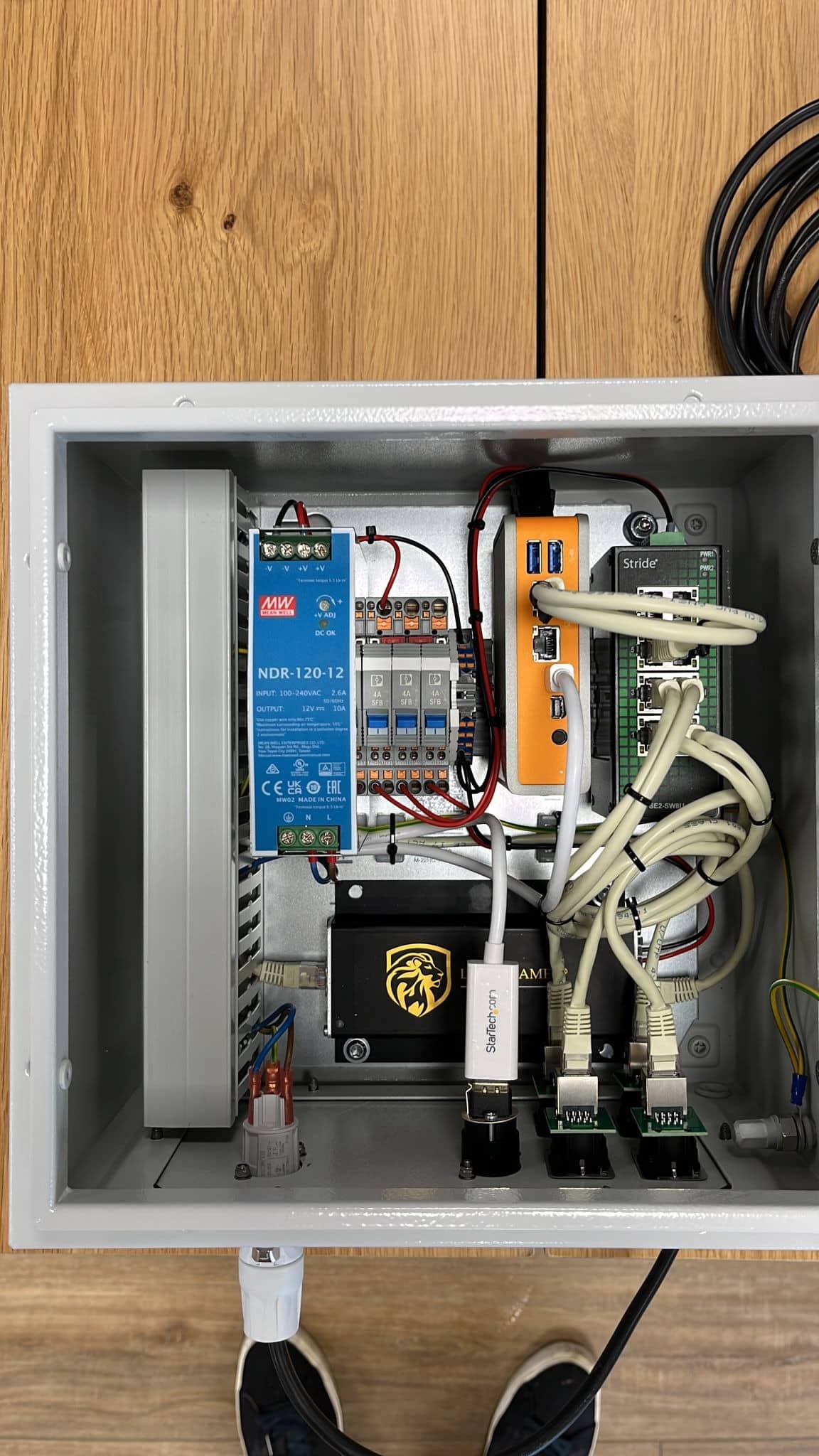
Early detection prevents escalation

Early detection prevents escalation at a stage when thermal runaway can still be prevented

A thermal runaway It doesn't happen overnight. In many cases, a lithium-ion battery shows signs that something is wrong at an early stage. By detecting these anomalies in a timely manner, action can be taken before a battery incident occurs.
With the early detection solutions With Liiontek, these signals are continuously monitored and critical deviations are quickly detected. This allows you to take appropriate action in a timely manner to prevent a thermal runaway to help prevent them or minimize their impact as much as possible. This reduces the risk of damage, business downtime, and further escalation.

Early detection prevents escalation

Thermal runaway does not occur without warning. Liiontek provides early-detection solutions that identify anomalies in lithium-ion batteries at an early stage. This buys valuable time to take appropriate measures before a situation escalates.

These solutions are designed for environments where lithium-ion batteries are stored, charged, or used. Early detection helps reduce the risk of thermal runaway and gives you greater control over safety, process continuity, and effective incident response.

View products

Why Early Detection Is Essential

A battery incident rarely occurs without prior warning signs. Lithium-ion batteries can exhibit abnormalities at an early stage, such as a rising temperature or the release of gases. By recognizing these signs in a timely manner, action can be taken before a battery incident escalates into thermal runaway.

A targeted detection approach gives you earlier insight into risks within cleanrooms, charging environments, storage locations, and technical installations. This allows you to raise the alarm more quickly, safely shut down processes, or take other appropriate measures. This helps reduce the risk of thermal runaway and minimizes the consequences of an incident. At the same time, you maintain greater control over safety, the continuity of your business processes, and an effective incident response.


How Liiontek Detects Battery Anomalies Early On

When it comes to early detection, Liiontek looks beyond a single measurement point. We map out the complete risk profile of the environment and, depending on the application, combine various detection techniques to identify anomalies in lithium-ion batteries as early as possible.

To this end, we use methods such as thermal monitoring, gas detection, and continuous monitoring of critical zones. By continuously analyzing temperature trends and other abnormal signals, we can identify potential risks in a timely manner before a battery incident escalates.

This approach is suitable for, among other things, logistics environments, maritime installations, defense applications, aviation, and energy storage. In all these situations, the goal is the same: to detect anomalies earlier, take appropriate measures more quickly, and reduce the risk of thermal runaway. In this way, early detection contributes to a safe and reliable work environment.

How Our Approach to Early Detection Works

Early detection requires more than just installing sensors. It starts with understanding the risks in your environment, followed by a well-thought-out system for detection, monitoring, and appropriate follow-up.
That is why Liiontek takes a step-by-step approach. We assess the risks, determine the most suitable detection technology, and ensure that anomalies in lithium-ion batteries are identified as early as possible. This buys valuable time to take appropriate measures before a battery incident can escalate into thermal runaway.
  • Step 1

    Environmental Risk Analysis

    We identify critical areas, battery applications, and potential escalation points so that detection is tailored to the actual risk.
  • Step 2

    Setting Up the Detection Solution

    Based on the situation, we determine which detection techniques are needed to identify abnormalities in lithium-ion batteries as early as possible.
  • Step 3

    Continuous monitoring of deviations

    Depending on the application, temperature, gas emissions, and other critical parameters are continuously monitored so that any abnormal battery behavior is detected in a timely manner.
  • Step 4

    Alerting and Targeted Follow-Up

    When an anomaly is detected, there is immediate opportunity to raise an alert, assess the situation, and take appropriate next steps.
CONTACT US

Earlier detection means better control over risk

When it comes to lithium risks, time is a critical factor. The sooner anomalies are detected, the more opportunities there are to take appropriate measures and mitigate the consequences of a battery incident. That is why early detection is an essential part of a comprehensive safety approach.
Liiontek helps organizations implement a detection solution tailored to their specific application, risks, and operational environment. By combining early detection with appropriate safety measures, a cohesive approach is created that contributes to a safe work environment and better management of lithium risks.

Early Detection of Battery Anomalies for High-Lithium-Risk Sectors

Early detection is critical in any environment where lithium-ion batteries are stored, charged, or used, and where safety is directly linked to process continuity. Liiontek supports organizations in sectors where a battery incident could lead to fire, smoke, operational downtime, or damage to critical infrastructure. Examples include the maritime sector, defense, aviation, logistics, and energy storage.
The risks vary by sector, and the requirements for detection and follow-up are not the same everywhere. That is why we look not only at the detection technology, but above all at its application and the specific risks within your organization. This results in a detection solution that is tailored to real-world conditions and helps identify battery anomalies early on, so that appropriate measures can be taken before a situation escalates.

Discover the benefits of early detection

The right approach starts with an understanding of your application, risk profile, and the requirements for lithium safety.
View your industry
Have your situation assessed and find out which detection approach best suits your environment, risks, and operational requirements.
Request a service proposal