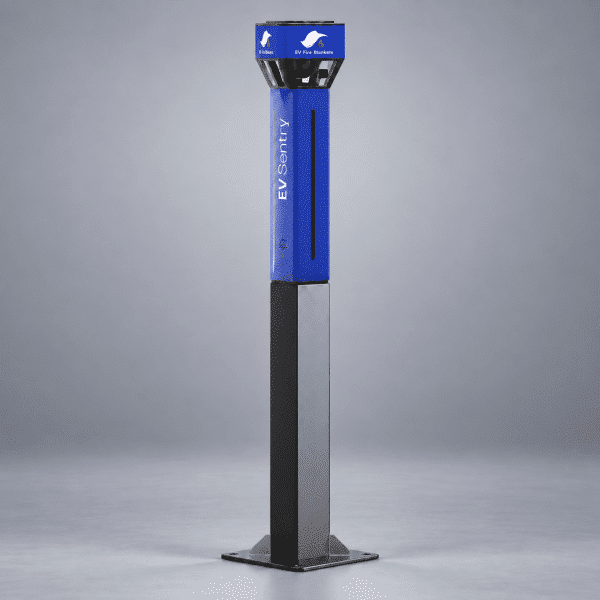
EV FirePro Plus
Advanced Fire Protection for Electric Vehicles in Commercial Parking Facilities
View product
Continuous monitoring and early detection of fire risks in electric vehicles and lithium-ion batteries.
The EV SENTRY ES-1 Lithium Fire Monitor is an advanced detection system for continuously monitoring electric vehicles and devices with lithium-ion batteries.
€ 5.808,00 including taxLithium-ion batteries are increasingly being used in electric vehicles, energy storage, electric mobility, and a wide range of devices. Although this technology is reliable, damage, overheating, or an internal defect can, in exceptional cases, lead to a serious battery incident.
That is precisely why early detection an important layer of security.
The EV Sentry ES 1 It continuously monitors electric vehicles and devices with lithium-ion batteries and is designed to detect potential signs of a fire hazard at an early stage.
This means there is no need to wait until an incident has fully unfolded. An early warning makes it possible to to take appropriate measures more quickly and to prevent further escalation as much as possible.
This makes the EV Sentry ES 1 an attractive option for both EV charging stations and other environments where lithium-ion batteries are charged, stored, or used in commercial applications.
The EV Sentry ES 1 was developed to detect potential fire hazards at an early stage, enabling a faster response to any abnormal situation.
The system continuously monitors the relevant environment, thereby creating a permanent detection layer around electric vehicles and lithium-ion batteries.
In addition to electric vehicles, the EV Sentry ES 1 can be used at locations where devices and systems with lithium-ion batteries are present.
By identifying a potential risk early on, there is more time to take appropriate measures and help limit further escalation and consequential damage.
The EV Sentry ES 1 is a detection system designed for the continuous monitoring of electric vehicles and devices that use lithium-ion batteries.
The system focuses on the Early detection of potential fire hazards. This allows any unusual situation to be brought to light sooner and follow-up measures to be implemented more quickly.
This continuous monitoring makes the EV Sentry ES 1 suitable as an additional safety measure at locations where lithium-ion batteries are a key component of vehicles, equipment, or business processes.
The final configuration and application can be tailored to the location and the risks involved.
HOW DOES IT WORK?
The EV Sentry ES 1 continuously monitors the environment where electric vehicles or devices with lithium-ion batteries are present.
The system is designed to identify potential signs that may indicate an increased fire risk.
When an unusual situation is detected, it can early warning are used to take appropriate measures.
The main advantage of this is time. The sooner a potential battery problem is detected, the greater the chance of taking action before the situation escalates further.
The EV Sentry ES 1 is therefore a early detection layer as part of the overall lithium-ion and EV safety strategy.
APPLICATIONS
The EV Sentry ES 1 is suitable for locations where electric vehicles and devices with lithium-ion batteries are loaded, parked, stored, or used.
The system is particularly useful at locations where a battery incident could affect nearby vehicles, equipment, buildings, or business processes.
The final placement and configuration of the system must be tailored to the environment, existing battery risks, and the desired safety strategy.
Possible applications include:
The EV Sentry ES 1 is the early detection layer within a broader approach to EV and lithium-ion battery safety.
The first layer of safety is prevention. Proper use and maintenance of batteries, appropriate charging equipment, and periodic inspections of vehicles and equipment help reduce the likelihood of an incident.
The next layer is Continuous monitoring and early detection. The EV Sentry ES 1 was developed to detect potential fire hazards as early as possible, so that action isn’t taken only after a fire has already fully developed.
After a warning is issued, appropriate response measures can be taken. Depending on the location, this can be combined with alarm, shutdown, appropriate firefighting, and containment.
This creates a layered security strategy in which prevention, early detection, intervention, and containment complement each other.