What can €500 in lithium safety actually change?
We insure our homes. We insure our cars. Companies insure their buildings, machinery, inventory, and business continuity.
But at the same time, we are charging more and more lithium-ion batteries every day.
E-bikes in the garage.
Power tools in the company van.
Power banks and laptops in the office.
Electric tools in the workshop.
Scooters, vacuum cleaners, drones, and garden tools at home.
And yet we rarely ask ourselves this question:
What actually happens if one of those batteries fails tonight?
At Liiontek, we believe lithium safety does not always have to be complex or expensive.
In fact:
What can you change with just €500?
The answer is surprisingly a lot.
Not because €500 makes a home or business completely fire-safe. No product can guarantee that.
But because for a relatively small amount, you can add multiple additional safety layers between a failing battery and a major fire.
And those first minutes can make all the difference.

Situation 1: at home
Imagine: in the garage there are two e-bikes.
Next to them are batteries from a drill, lawnmower, and leaf blower. Inside the house are laptops, phones, tablets, and power banks.
At night, an e-bike is charging.
Without additional measures
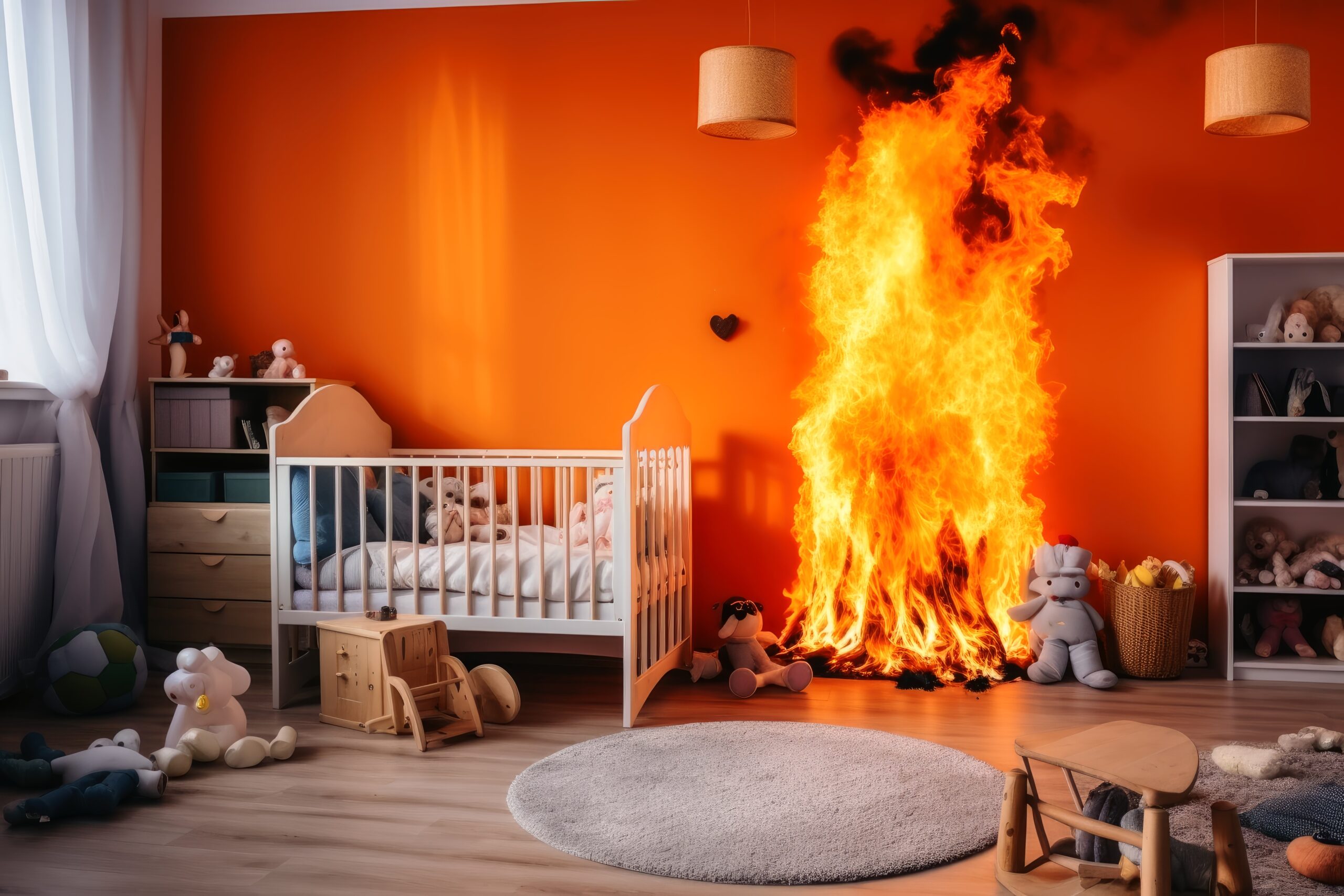
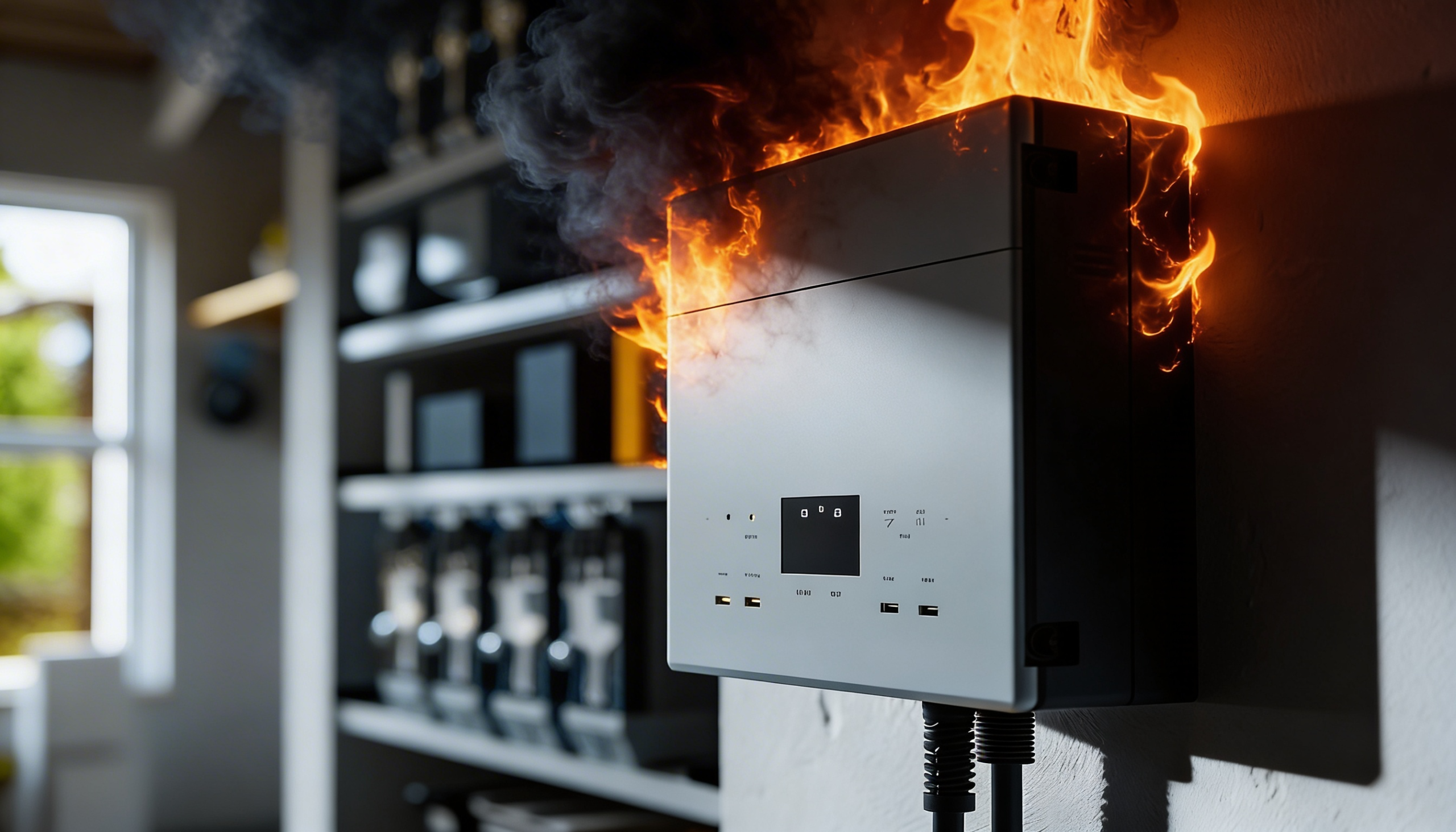
A battery begins to fail internally during charging.
Temperature rises.
Flammable and toxic gases are released.
Thermal runaway develops and the battery pack ignites.
The bike is next to another bike. Behind it is a cabinet. Next to it is a car.
At that point, the problem is no longer:
“A battery is burning.”
The problem becomes:
“A house fire is developing.”
Lithium-ion incidents can escalate very quickly, reach extremely high temperatures, produce toxic smoke, and even reignite after apparent extinguishing.
What if we add €500?
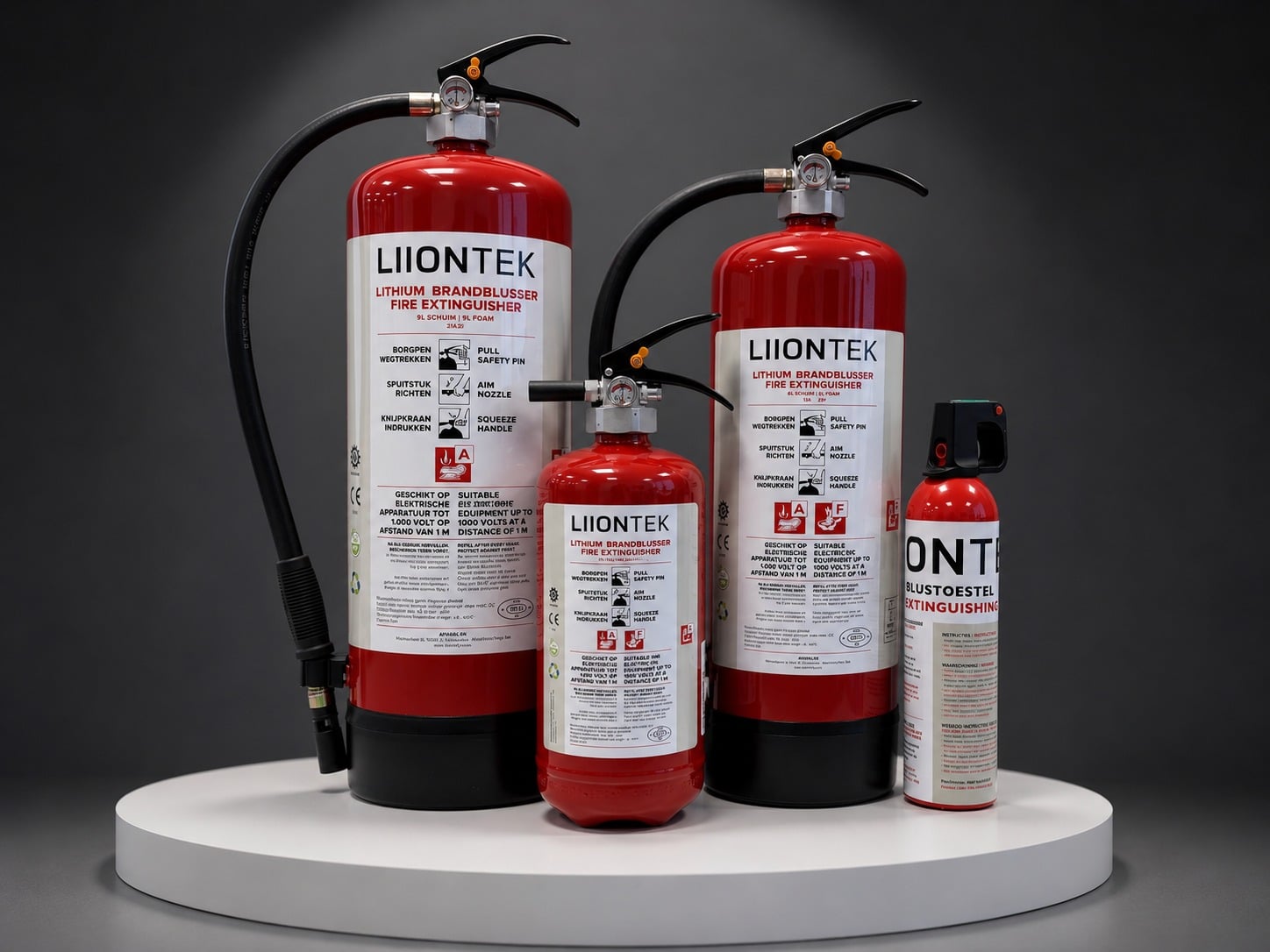
For less than €500, you can for example place two compact lithium-ion suitable extinguishers strategically and also allocate budget for additional detection or protection at the actual charging location.
A 2-liter ASAPs lithium-ion fire extinguisher currently costs €96.80 including VAT. The larger 6-liter version costs €193.60. These extinguishers are designed to cool the battery and, depending on the model, have a range of several meters.
That changes something fundamental.
You gain the ability to intervene early.
Not when the garage is already fully on fire, but when the incident is still local and manageable.
Add early detection of temperature or battery off-gassing, and you move even earlier in the incident chain.
That is what prevention is about:
Detect → Alert → Intervene → Contain
Instead of:
Battery failure → Thermal runaway → Fire → Building fire → Fire brigade → Damage
€500 does not buy a guarantee that no fire will ever occur.
It buys something else:
Time. Detection. Ability to act. And a chance to prevent escalation.
Situation 2: the company van
This may be an even better example.
An installer drives home after work.
In the back of his van are:
Together, this represents thousands of euros worth of tools.
But more importantly:
there are dozens of lithium-ion cells in one relatively small enclosed space.
The van is parked next to the house in the evening.
One battery was dropped earlier that day.
Nothing seems wrong on the outside.
But internally, a cell is damaged.
Scenario A: nothing added
Hours later, the battery develops an internal failure.
Thermal runaway begins.
The battery ignites.
Nearby tools are exposed to heat.
Plastics start burning.
Other batteries become involved.
Eventually, it is no longer just a battery fire.
The entire van is on fire.
And if that van is parked next to a house, garage, or other vehicle, the incident can escalate further.
The damage then goes far beyond the value of a single battery:
van + tools + downtime + replacement transport + lost work + possible damage to surroundings.
Scenario B: a FireBag
Now imagine that damaged, suspicious, or valuable lithium batteries are not stored loosely among tools, but placed in a dedicated containment solution.
This adds another safety layer.
The goal is not to claim that a battery will never fail.
The goal is:
If it fails, we want to prevent a single battery from immediately involving the entire contents of the van.
And importantly: this also plays a critical role in homes and workplaces in terms of evacuation safety.
When, for example, a home battery, e-bike, or tool battery is located near a hallway, staircase, or exit, a containment solution or first intervention tool can help ensure that a developing fire remains manageable for longer or is kept localized, giving occupants or employees more time to evacuate safely.
This is often an overlooked aspect of lithium safety:
not only reducing damage, but especially gaining time to get out safely.
€500 versus the value you are protecting
And this is where we believe the problem lies in how we think about safety.
We often compare a safety product to the value of the battery.
A battery might cost €150.
So why invest hundreds of euros in protection?
But that is the wrong comparison.
You should not compare €500 to the battery.
You should compare it to:
the home where the battery is charging;
the van where it is stored;
the tools next to it;
the production facility where it is used;
the people sleeping above the garage;
and in business:
the cost of operational downtime.
Then €500 suddenly looks very different.
No product makes lithium risk-free
And this is important to say.
A fire extinguisher does not guarantee that a fire will never occur.
A FireBag does not guarantee that a damaged battery will never enter thermal runaway.
A gas or temperature sensor does not repair a defective cell.
But combine multiple measures and something much more important emerges:
a layered safety concept.
Prevention
Safe charging, using quality batteries, and removing damaged batteries from use.
Detection
Identifying abnormal behavior as early as possible.
Intervention
Having the right tools available to act immediately.
Containment
Preventing a single battery incident from spreading easily to its surroundings.
So the question is not: “Is €500 a lot of money?”
The better question is:
“What is around my batteries that I absolutely cannot afford to lose?”
Take a look around tonight.
Where is your e-bike?
Where are your tool batteries?
Where do you charge your laptop?
Where is the company van parked?
What is directly next to them?
And most importantly:
What happens if one of those batteries goes into thermal runaway at 03:00 at night?
Do you have detection?
Do you have the right extinguishing tools?
Is the battery isolated from its surroundings?
Can you act safely?
Or is the first real safety response the fire brigade already on its way?
Start small. But start.
At Liiontek, we believe lithium safety should not only be for large BESS installations, superyachts, factories, or data centers.
It starts at home.
In the garage.
In the company van.
In the workshop.
And sometimes, an investment of less than €500 can already make the difference between having no specific lithium protection at all and having multiple additional safety layers.
Not every lithium fire can be prevented.
But we can do much more to prevent a small battery problem from becoming a major fire.
Because ultimately, the cheapest incident is always the one that never escalates.
Protecting People. Preserving Business.
Liiontek – Lithium Fire Prevention & Safety Solutions